View All


 View All


 View All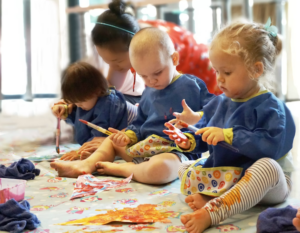


 View All


 View All


 View All


 View All

 View All


 View All


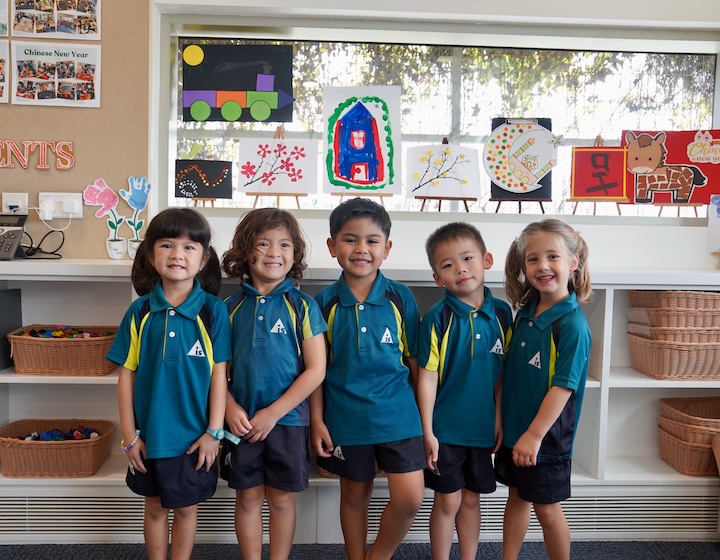
We sit with Stuart Armistead, Head of Early Years at Australian International School in Singapore, as he weighs in on why literacy and numeracy aren’t the only building blocks for lifelong learning.
Did you know that a baby’s brain doubles in size during the first year of life? It continues to grow rapidly, reaching around 80% of its adult size by age 3 and approximately 85% to 90% by age 5¹. In fact, a baby’s brain forms more than one million new neural connections every second, laying the foundation for everything from movement and language to memory, learning and problem-solving¹.
But these connections don’t form on their own. Positive interactions with caregivers, meaningful play and enriching everyday experiences all help strengthen these neural pathways. According to Stuart Armistead, Head of Early Years at Australian International School in Singapore, helping children thrive isn’t just about teaching them to read, write or count. Developing cognitive, physical, social and emotional skills during the early years is just as important, as these form the foundation for lifelong learning and future success.
So, what should parents really be focusing on during these early years? We asked Stuart to bust some common misconceptions about the early years and the role parents play in supporting their little ones.
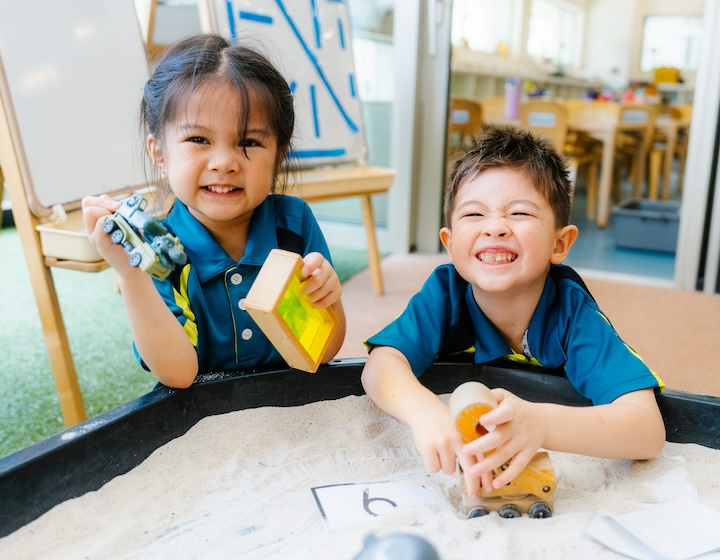
Why are the first six years so important for a child’s brain development?
By the age of six, around 85% of a child’s brain development has already taken place. As such, during those developmental years, the focus should not be on acquiring knowledge alone, but also on developing the cognitive, physical, social and emotional skills that will form the stepping stones for the rest of their learning journey. For early childhood educators, the priority is not simply teaching children what to learn; we create the space that shapes how they learn, think, and engage with the world around them.
Many parents feel pressure to get their children ahead academically from a young age. What are the potential downsides of prioritising academic achievement too early?
One of the best examples of future and unforeseen challenges is that today’s children will enter the workplace to secure jobs that do not yet exist. This brings to life the point that, in an ever-changing world, focusing too closely on traditional academic skills such as reading and writing is not sufficient to prepare them for what lies ahead.
To better prepare our children, we must cultivate skills, dispositions, and attributes in new ways. For educators, this means helping children develop independence, curiosity and problem-solving skills, while also building resilience, communication skills and the ability to collaborate. Children are not passive recipients of knowledge. Even from a very young age, they are capable thinkers, investigators and problem-solvers. One of the most important roles of educators is to create opportunities for children to make choices, ask questions, pursue interests and develop a sense of ownership over their learning.
Some of the most important learning occurs when children encounter challenges. Rather than removing every obstacle, adults should support children in navigating difficulties, helping them develop confidence in their ability to solve problems. Self-regulation, independence, resilience, and a love for learning are the kinds of attributes and qualities that we need to develop in order to ensure that a child develops during their formative years. Otherwise, gaps or ‘holes’ will begin to emerge, and in the long run, this will impact not only their academic outcomes, but also their emotional growth and well-being.
A well-rounded child who is confident, emotionally secure and intellectually curious is far better prepared to succeed in a rapidly evolving world than one who has simply achieved the traditional academic milestones by which we measure success. The goal of early education should not merely be to fill children with knowledge as quickly as possible, but to ensure a strong, resilient foundation ready for lifelong learning and the challenges that may arise.
How does play-based and inquiry-led learning help children develop the skills they’ll need for the future?
Both methods are often misunderstood by parents, who may see them as unstructured and a softer alternative to formal instruction. To the contrary, play-based learning is deeply intentional. When children engage in play, they are not just merely playing; they are exploring ideas and making meaning of the world around them.
The early years are a time of extraordinary curiosity. Young children approach the world with awe, asking questions, making connections and finding joy in discovery. Protecting and nurturing this natural curiosity may be one of the most important responsibilities of educators and parents.
Through imaginative role-play, collaborative block-building, outdoor exploration, problem-solving games, and creative activities such as painting and music-making, children develop cognitively, socially, emotionally, and physically. They develop autonomy, confidence and the ability to make informed choices right in their early years.
Play-based learning is thus a complex and powerful form of learning pedagogy, particularly in the early years, when the brain is most receptive to this kind of learning.

How can parents and educators work together to support a child’s development?
Before children can take risks, solve problems or develop confidence, they need trusting relationships with the adults and peers around them. Partnerships between schools and parents are therefore vital in a child’s early years. When schools partner with families, listen and understand their aspirations, cultures and contexts, they can be responsive, ensuring that the child gets a more personalised approach to learning. They are then able to put in place the appropriate next steps to help each child get to where they want to be.
Parents are a child’s first teachers and play a significant role in modelling the correct behaviours for children. By maintaining a consistent language, schools can help the child to better learn and understand what to do when they feel uncomfortable or challenged.
Building strong foundations early
When we get the early years right, children move into the later stages of education with not only strong academic foundations, but also the confidence, curiosity and mindset to thrive in an ever-changing world. Want to see how play-based, inquiry-led learning comes to life in the classroom? Book a school tour at Australian International School (AIS) Singapore to learn more about its Early Years curriculum.

Australian International School (AIS) Singapore, 1 Lorong Chuan, Singapore 556818, www.ais.com.sg
References:
1. Brain Development. Available at https://www.firstthingsfirst.org/early-childhood-matters/brain-development/.


![[𝗙𝗜𝗥𝗦𝗧 𝗟𝗢𝗢𝗞] 𝗪𝗵𝗮𝘁 𝗧𝗼 𝗘𝘅𝗽𝗲𝗰𝘁 𝗔𝘁 𝗧𝗵𝗲 𝗙𝟭 𝗧𝗵𝘂𝗿𝘀𝗱𝗮𝘆 𝗣𝗶𝘁 𝗟𝗮𝗻𝗲 𝗘𝘅𝗽𝗲𝗿𝗶𝗲𝗻𝗰𝗲 🏎👀
We were among the 4,500 fans who got to experience the F1 pit lane before the circuit opens for race weekend. We walked along the pit lane, got a close-up look at the team garages and cars and spotted drivers and mechanics getting everything ready for the weekend.
There’s also the Zone 1 F1 Village to explore, with interactive activities happening throughout the evening.
𝗧𝗵𝗶𝗻𝗴𝘀 𝘁𝗼 𝗻𝗼𝘁𝗲:
- Be prepared to wait. The queue for the Thursday Pit Lane Experience can get very long, so give yourself plenty of time.
- There’s a bag check before entry, which can add to the waiting time. If you’re travelling light, you can join the queue for those without bags and skip the bag-check queue.
- Bring a handheld fan as it can get pretty warm.
- There are merchandise booths at the Zone 1 village, so you can shop for caps, tees and other F1 gear while you’re there.
- The performances at the Wharf Stage were great and definitely helped get us hyped up before heading into the pit lane.
- You’ll be walking around the circuit, so comfortable shoes are a good idea.
- Once you clear the bag check, you’ll have 25 minutes in the pit lane. There are four waves from 8.30pm to 10.30pm.
- Tip: If you don’t want to spend ages queueing, try heading in around 9.30pm and aim for the last wave. We still saw quite a few people strolling in when we were leaving, so it might be worth the gamble!
𝗪𝗵𝗲𝗿𝗲: Marina Bay Street Circuit
𝗛𝗼𝘄 𝗺𝘂𝗰𝗵: Free for all successful ballot applicants (You do not need a race ticket to enter the ballot. Each successful applicant receives a pair of tickets.)
Comment “F1” or link in bio for all the ongoing & upcoming F1 events (Most of them are free)!](https://www.sassymamasg.com/wp-content/plugins/instagram-feed/img/placeholder.png)