View All
 View All
 View All

 View All
 View All

 View All

 View All

 View All

 View All



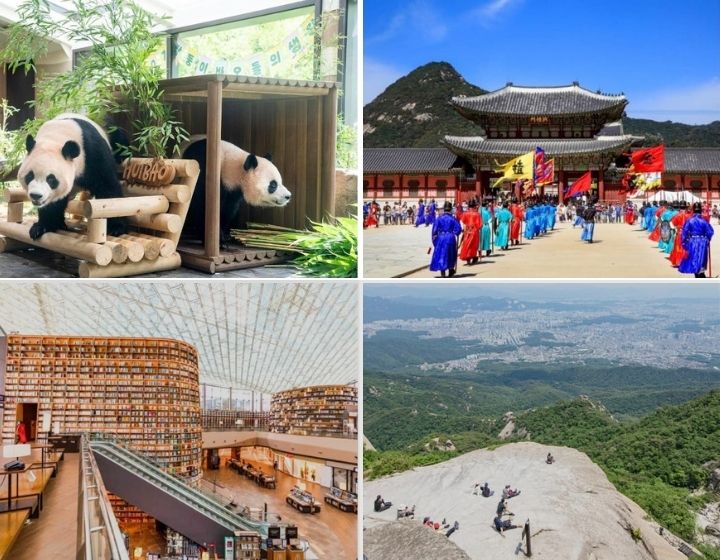
Dreaming up a Seoul itinerary for the whole family? This guide has you covered with all the best things to do in Seoul with kids, from places to go to what to eat and how to get around. Plus, get insider tips straight from a local who’s done it all and had a blast doing it.
Seoul has quietly become one of the most requested destinations on kids’ travel wishlists, and honestly, it’s not hard to see why. Between the K-pop craze, binge-worthy K-dramas, and the massive popularity of KPop Demon Hunters, kids these days look at Seoul and see a city full of familiar faces and stories, not just another spot on the map. And if you’ve only ever known Seoul for its KBBQ restaurants, shopping, and medical tourism, you might be wondering what to do in Seoul with kids—but the city is packed with family-friendly attractions you’d never expect. Venture a little further out, and there are even more things to do in Korea for family fun.
Seoul itself balances centuries-old palaces and traditions with a buzzing, trend-forward energy, giving kids and parents alike plenty to discover at every turn. If you’re planning to visit Korea for the real deal, read on for the full scoop on where to go, what to do, and how to make the most of Seoul with kids.
Read more: 23+ Quick Weekend Getaway Ideas With Kids
Jump to:
– Family-fun things to do in Seoul
– Places to go in Seoul
– Shopping in Seoul
– Where to eat in Seoul
– How to travel from Singapore to Seoul
– Family tips for visiting Seoul
Family-fun things to do in Seoul
Animal parks: Free zoo & animal encounters in Seoul
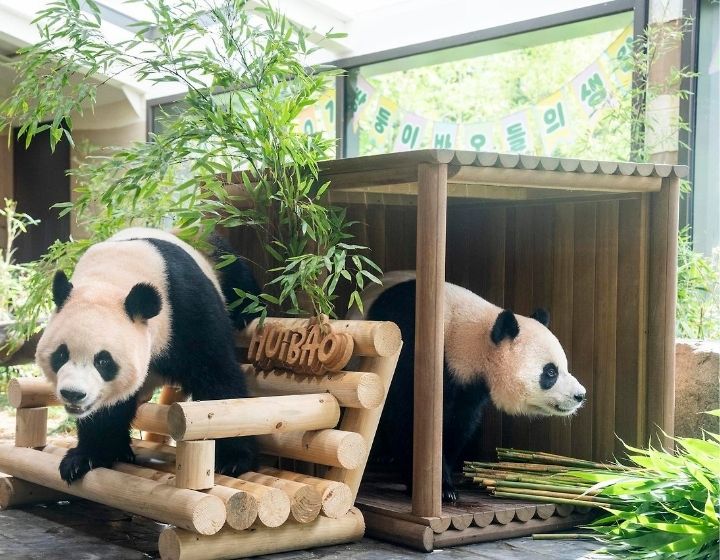
Got a mini animal lover? Seoul has plenty of parks built around getting up close with furry, feathered and flippered friends. Start with Seoul Children’s Grand Park in Gwangjin-gu, one of the city’s best free family outings. It opened in 1973 and was once home to the biggest amusement park in Seoul, and since 2006 entry has been free for everyone, aside from a few paid attractions. Its zoo is small enough to explore without wearing everyone out, and the sprawling grounds still have amusement rides and playgrounds scattered throughout, giving kids plenty of room to run wild, picnic, and burn off energy between animal sightings.
For a bigger day out, head to Seoul Grand Park in Gwacheon, about 40 minutes by subway from the city. This zoo traces its roots back to Korea’s very first zoo, opened in 1909. It has since grown into the biggest zoo in the country, home to over 2,000 animals, from giraffes and lions to sloths and toucans. Beyond the animals, there’s an expansive Botanical Garden and the Sky Lift, a scenic cable car ride over Gwacheon Lake that’s an attraction in its own right. Right next door is Seoul Land, an amusement park with rides for all ages, so you can easily turn it into a full-day adventure.
If you’re up for venturing outside the city, Everland in Yongin is Korea’s largest theme park and an easy day trip from Seoul. Beyond the rollercoasters and rides, don’t miss Zootopia, a 15,000-square-metre zone where around 2,000 animals live, including penguins, otters and other close-up encounters. There’s also Lost Valley, a nature-themed safari you tour by boat-like vehicle to spot roaming lions, giraffes and other wildlife. Save time for Panda World too. Giant pandas are something of a national obsession in Korea, thanks largely to Fu Bao, Everland’s breakout panda sensation, whose videos racked up hundreds of millions of views before she returned to China in 2024. Her siblings have carried the fandom forward, and the family keeps growing, with a new cub born there as recently as June 2026.
 Seoul Children’s Grand Park, 216 Neungdong-ro, Gwangjin-gu, Seoul, www.childrensgrandpark.com
Seoul Grand Park, 102 Daegongwongwangjang-ro, Gwacheon-si, Gyeonggi-do, www.seoulgrandpark.com
Everland, 199 Everland-ro, Cheoin-gu, Yongin-si, Gyeonggi-do, www.everland.com
Farm experiences: Strawberry-picking & dairy farm in Seoul
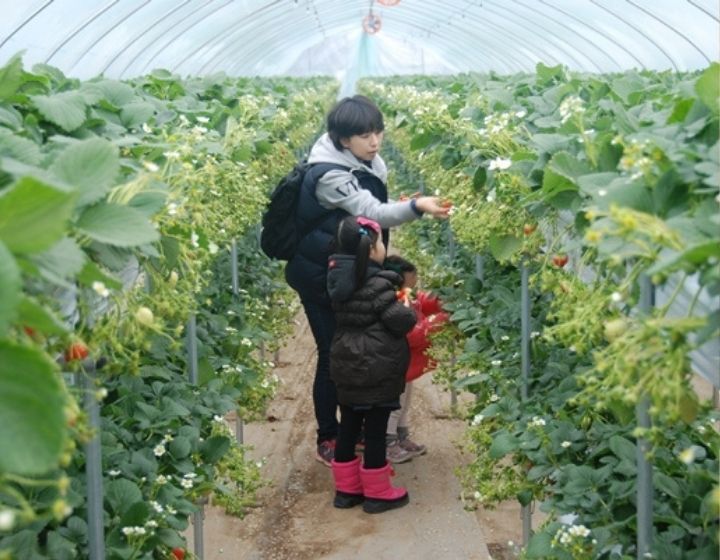
Seoul might be a city of skyscrapers, but its farm experiences are only a short trip away, and they’re some of the most rewarding outings for little ones who love getting their hands dirty. Strawberry picking shouldn’t be missed, especially between December and April. We tried Yangsuri Strawberry Farm in Yangpyeong, and it’s just one of many great options around Seoul. The experience covered strawberry picking, and for an additional cost, you can also choose a jam-making session where the kids get to mash and stir their own batch. Even if you skip the jam-making, you’re still treated to fresh bread served with handmade strawberry jam at the end, so everyone gets a taste either way. It’s the kind of hands-on farm day that’s not easy to come by in Singapore, and it doubles as a fun, educational way for kids to learn where their food comes from.
Beyond strawberries, dairy farm experiences are also worth the trip. Agroland Taeshin Farm in Yesan, about 2 hours’ drive from Seoul, was Korea’s first certified dairy experience farm, and it’s an easy way to give kids a proper taste of farm life. They can wander the open plains to feed the cows and even try milking one themselves, then turn the fresh milk into their own ice cream. It’s all set against rolling countryside that offers a quiet, peaceful break from the city. It gives kids time to soak up some nature, away from the usual theme park and indoor play buzz.
Yangsuri Strawberry Farm,7 Dumulmeori-gil 8beon-gil, Yangseo-myeon, Yangpyeong-gun, Gyeonggi-do, www.yangsuristrawberryfarm.com
Agroland Taeshin Farm, 231 Sangmong 2-gil, Godeok-myeon, Yesan-gun, Chungcheongnam-do, www.agrolandtaeshinfarm.com
Museums in Seoul: Kids’ museums & national artifacts
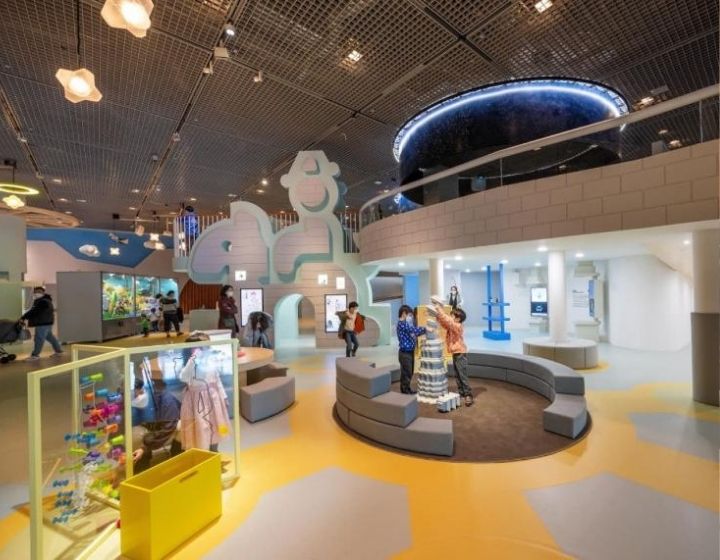
Seoul’s museums aren’t the stuffy, look-don’t-touch kind, and there are several designed specifically with kids in mind. Top of the list is the Children’s Museum of the National Museum of Korea in Yongsan, a playful wonderland for kids under 10 where everything is designed to be touched and explored. They can wander through a recreated Goguryeo-era house, dress up in ancient royal crowns, and try pottery-making, picking up Korean history and culture without it feeling like a lesson. It’s free to enter, though popularity means you’ll need to book a time slot in advance.
Just a short walk away is the National Museum of Korea itself, one of the largest museums in the country. It houses some of Korea’s most treasured national artifacts, including Silla-era gold crowns, alongside interactive displays and family-friendly exhibitions that keep older kids engaged while parents get their own dose of culture. It sits beside Yongsan Family Park, so it’s easy to follow up a museum visit with some time outdoors. Fun fact: the park sits on land once used as a golf course by the US military. It was part of a base that was off-limits to Korean citizens for over a century, before finally being handed back in 1992 and turned into the family-friendly green space it is today.
If you’re staying closer to central downtown, the Children’s Folk Museum near Gwanghwamun is another solid option, and there are a number of other kid-friendly museums in the area to round out the day. Its exhibits focus on play-based learning, making it easy for even the youngest visitors to enjoy.
Children’s Museum of the National Museum of Korea, 137 Seobinggo-ro, Yongsan-gu, Seoul, www.childrensmuseum.com
National Museum of Korea, 137 Seobinggo-ro, Yongsan-gu, Seoul, www.nationalmuseum.com
Children’s Folk Museum, 37 Samcheong-ro, Jongno-gu, Seoul, www.childrensfolkmuseum.com
Parks & playgrounds in Seoul
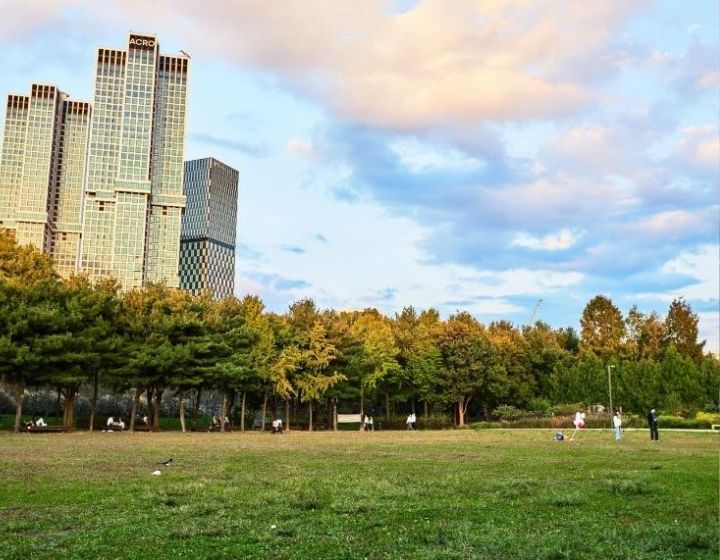
Seoul might be a bustling, high-rise city, but it’s surprising just how many parks are tucked into it, offering ample space for kids to run free after a day of sightseeing. Olympic Park in Songpa-gu is a legacy of the 1988 Seoul Olympics. Its 1.4 million square metres of open space now works just as well as a giant playground, with wide lawns for picnics, over 200 art installations to explore, and regular concerts and events that draw crowds throughout the year.
Seoul Forest in Seongdong-gu is another favourite, especially for its deer enclosure, where kids can buy feed from a vending machine and get up close with a small herd of spotted deer roaming a fenced natural habitat. Beyond that, there’s a playground with slides and climbing structures, a water play area by the pond, and plenty of green space for younger kids to just run around. It’s also right next to the trendy Seongsu neighbourhood, so it makes for an easy spot to rest and let the kids burn off energy in between cafe hopping and shopping.
For something more laid-back, head to the Han River Parks that line both banks of the river through the city, a go-to spot for locals looking to work out, jog, or picnic without going far. Yeouido and Ttukseom are especially popular with families, with playgrounds, wide open lawns, and even water play areas in summer. Entry is free, and thanks to Korea’s famously efficient delivery culture, you can order snacks straight to your picnic spot. Or we’d highly recommend grabbing a bowl of the famous Hangang ramen, cooked right there using the ramen makers at the convenience store. It’s best enjoyed with the skyline as your backdrop.
Olympic Park, 424 Olympic-ro, Songpa-gu, Seoul, www.olympicpark.com
Seoul Forest, 273 Ttukseom-ro, Seongdong-gu, Seoul, www.seoulforest.com
Hiking in Seoul: Easy access from the city
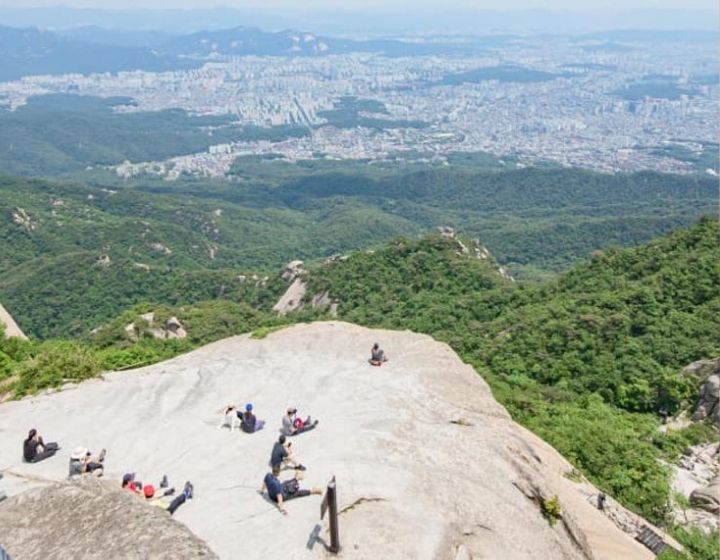
Singapore doesn’t really do mountains, so if anyone in the family is a hiking or nature lover, Seoul is a genuine treat. Unlike back home, actual mountains are just a subway ride away, and there always seems to be one in view no matter where you are in the city. Bukhansan National Park is the big one, rising to 836.5 metres at its highest peak, Baegundae. It’s easy to reach by subway, despite feeling worlds away from the city once you’re on the trail. It has everything from tough peaks like Baegundae to gentler, well-marked routes such as the Bukhansanseong course, which is considered the easiest way up and manageable for families who don’t hike regularly.
Inwangsan and Bukaksan, meanwhile, sit right in the heart of the city, yet still manage to feel like a proper escape into nature. Inwangsan is a great, low-key option for a family day out, with a short trail that’s manageable for kids and sweeping city views. Along the way, there are a few interesting stops too, like a shamanist shrine tucked into the mountainside. The Bukaksan trail follows a stretch of the old Seoul City Wall, offering a similar mix of nature and skyline views, though the nearly 1,100 stairs to the summit make it better suited to families with older kids. One of the trailheads starts right by the Blue House, so it’s easy to combine the hike with a visit to Korea’s former presidential residence.
Bukhansan National Park, 262 Bogungmun-ro, Seongbuk-gu, Seoul, www.bukhansannationalpark.com
Inwangsan Mountain, San 2-1, Muak-dong, Jongno-gu, Seoul
Bugaksan Mountain, Cheongun-dong, Jongno-gu, Seoul
Places to go in Seoul
Lotte World & COEX: Seoul’s giant indoor attractions for rainy days
Seoul’s weather doesn’t always cooperate, but that’s not a problem with two of the city’s biggest attractions built almost entirely indoors. Lotte World in Jamsil opened back in 1989 and remains one of the most fun places to bring kids in Seoul, with over 40 rides, parades, and even an ice skating rink, all running rain or shine. Right next door is Lotte World Tower, Korea’s tallest building at 555 metres, featuring an aquarium and Seoul Sky, an observation deck on the 117th floor with glass-floor views over the entire city. The tower also houses a huge shopping complex with everything from department stores to a duty-free floor, making it an easy spot for parents to squeeze in some shopping while the kids wind down.
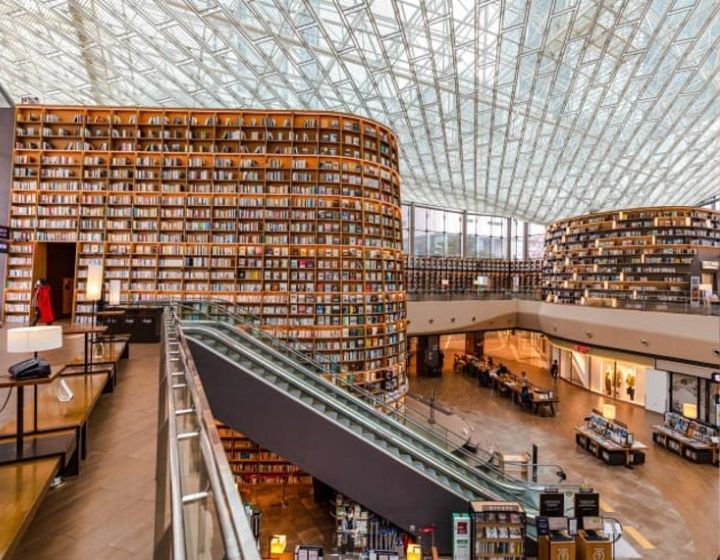
Over in Gangnam, Starfield Coex Mall is one of the largest underground malls in the world, and it’s a full day out in itself. Kids can wander the Starfield Library, with its towering 13-metre bookshelves that make for one of Seoul’s most photographed spots. (Fun fact: Anne Hathaway even said visiting it had been on her bucket list.) From there, head to SEA LIFE COEX Aquarium next door, home to some 20,000 sea creatures across 650 species, including Korea’s largest shark collection. The whole complex is flat and stroller-friendly, and free strollers are available to borrow, making it an easy, weather-proof family outing.
Lotte World, 240 Olympic-ro, Songpa-gu, Seoul, www.lotteworld.com
Starfield Coex Mall, 513 Yeongdong-daero, Gangnam-gu, Seoul, www.coex.com
Gyeongbokgung & Bukchon Hanok Village: Seoul’s storybook step back in time
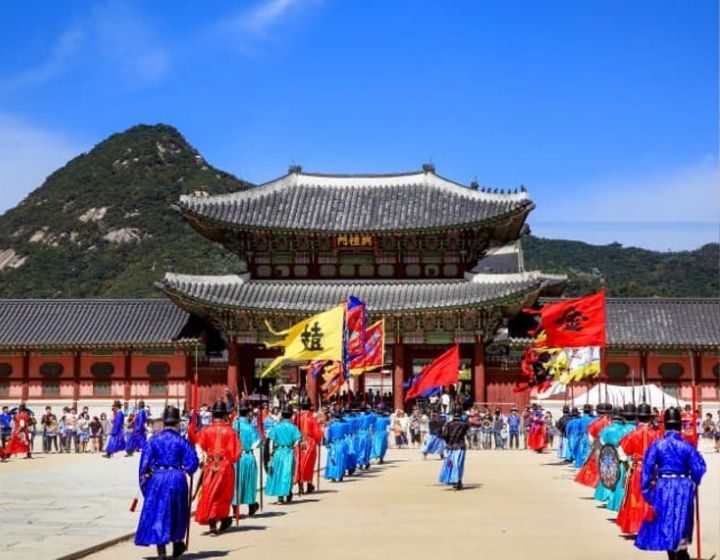
Kids don’t need to understand Korean history to be won over by Gyeongbokgung Palace. Entry is free for anyone under 19. And the twice-daily Changing of the Guard ceremony, complete with vibrant traditional attire and drums, is the kind of spectacle that keeps little ones glued in place without them realising they’re learning anything. Rent a hanbok from one of the shops just outside the gates (which also gets you free palace entry) and let the kids explore the vast grounds feeling like tiny royals straight out of a K-drama. The palace grounds are massive, and my toddler had a fantastic time just running around the open courtyards—no ceremony or history lesson needed for her to have fun.
Just a short walk away is Bukchon Hanok Village, a real, still-lived-in neighbourhood of around 900 traditional hanok houses tucked into narrow, winding alleys. It’s less about a single attraction and more about strolling through, peeking into open hanoks turned into tea houses and craft shops, and taking in daily life as it unfolds around you. If you want a glimpse of traditional Korean living, this is one spot worth adding to your itinerary.
Gyeongbokgung Palace, 161 Sajik-ro, Jongno-gu, Seoul, www.gyeongbokgung.com
Bukchon Hanok Village, 37 Gyedong-gil, Jongno-gu, Seoul, www.bukchonhanokvillage.com
Gwangjang & Sinheung Market: Seoul’s markets for grazing & exploring
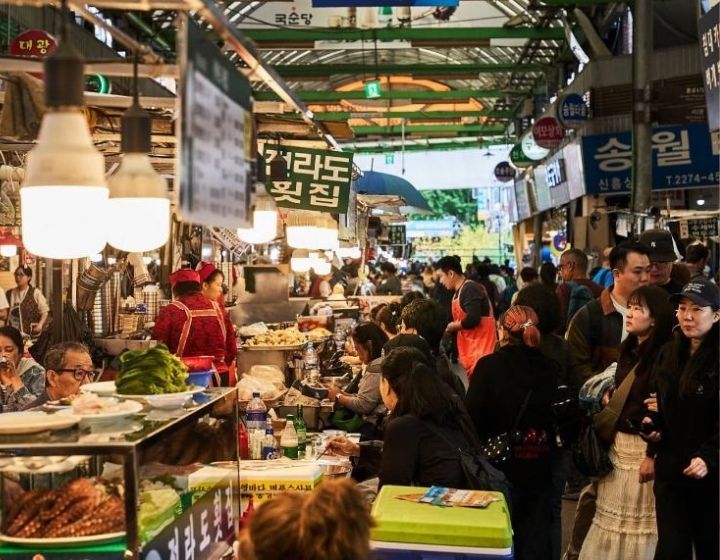
Gwangjang Market is a great, sensory-overload kind of stop for kids, especially the food-loving ones. It’s been running since 1905, making it South Korea’s oldest continuously operating market, and the maze of stalls selling bindaetteok, tteokbokki and other street food is an easy way to get kids trying new things without committing to a full sit-down meal. Some stalls even had their moment on Netflix’s Street Food: Asia, including a knife-cut noodle vendor whose stall now draws queues of fans. It’s busy and loud, which younger kids tend to find exciting rather than overwhelming, with sections functioning like a proper wet market, complete with fresh seafood and produce on display. There’s plenty to look at even if they’re not hungry, from hanbok shops to household goods that have been sold by the same families for generations.
Sinheung Market in Haebangchon is a smaller, more low-key alternative. It started out as a quiet neighbourhood alley market back in 1969, but these days it’s full of rooftop cafes, indie shops and casual eateries tucked into its narrow lanes, some with views over Namsan Tower. The neighbourhood’s name actually means “liberation village”, named after the wave of Koreans who settled the hillside after liberation from Japanese colonial rule in 1945, later joined by refugees from the Korean War. These days it’s turned into one of the trendiest pockets of the city among young locals, with an easygoing, international feel to it. It’s less about the market and more about wandering the surrounding streets, so it works best as an unhurried stop paired with a meal if you’re already in the area with the kids.
Gwangjang Market, 88 Cheonggyecheon-ro, Jongno-gu, Seoul, www.gwangjangmarket.com
Haebangchon Sinheung Market, 95-9 Sinheung-ro, Yongsan-gu, Seoul
N Seoul Tower: Seoul’s most iconic view, combined with hiking fun
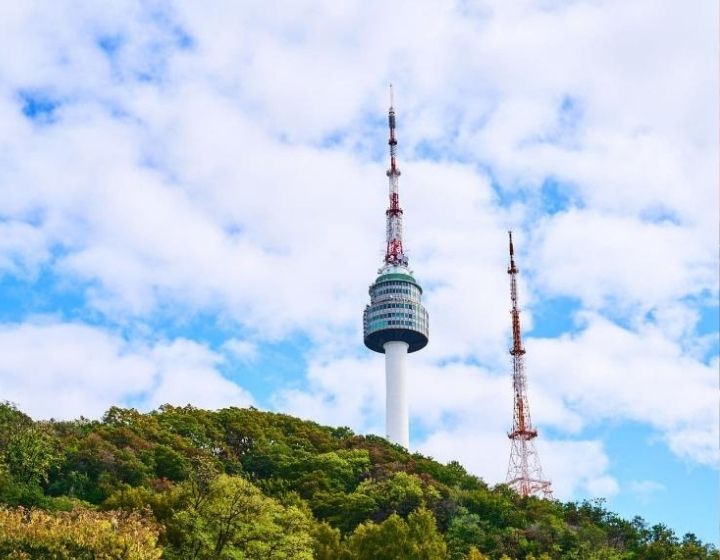
Perched on top of Namsan Mountain, N Seoul Tower has been the city’s go-to landmark since it opened to the public back in 1980, though it actually started out as a broadcast tower in 1969. Half the fun with kids is just getting up there. Hop on the cable car for a quick, scenic ride, or take the shaded walking trail if you’re up for it. Once you’re at the top, the 360-degree observation deck gives you sweeping views over the Han River and the whole city sprawled out below.
Down at the base, don’t skip the love lock wall, thousands of padlocks left behind by couples over the years, which kids will probably recognise from K-dramas like ‘Boys Over Flowers’. It’s free to wander around and check out, and kids under 3 get into the observation deck free too. All in all, it’s an easy outing that still gets you one of the best views in the city.
N Seoul Tower, 105 Namsangongwon-gil, Yongsan-gu, Seoul,www.nseoultower.com
Nami Island: A half-day escape into nature & K-drama nostalgia
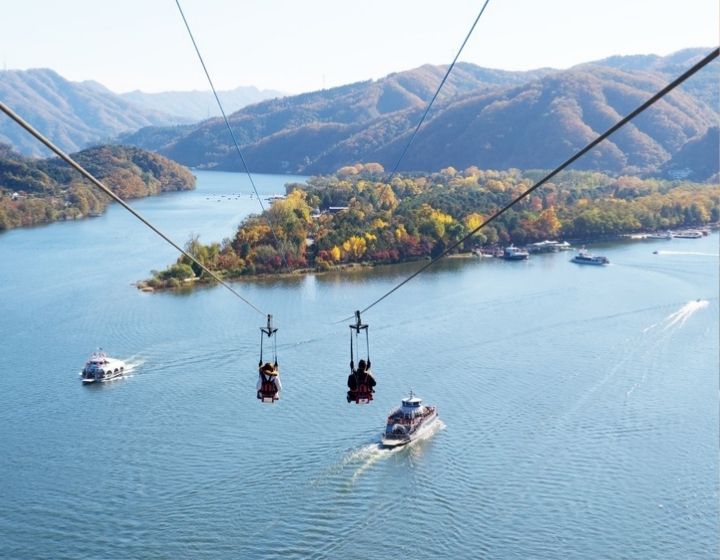
Nami Island is about 90 minutes northeast of Seoul, and it’s the kind of place where kids can just run loose. There are no cars allowed on the island, so it’s basically one big, safe playground of tree-lined paths that change look completely depending on when you visit, pink blossoms in spring, fiery red and gold in autumn. It became famous as a filming spot for the K-drama ‘Winter Sonata’, which won’t mean much to the kids, but the bikes will. Renting one to loop around the island is half the appeal, and if anyone’s after a bit more of a thrill, there’s a zipline nearby that’s one of the longest in Korea. Even getting there is an adventure in itself, hop on the ferry, or skip it entirely and zipline straight onto the island.
It’s an easy one to build a full day trip around too, since a few other family favourites sit just nearby. The Garden of Morning Calm, an expansive botanical garden with themed flower gardens and walking trails, looks like a completely different place depending on the season, and turns into a glowing Starlight Garden Festival come winter. Petite France, a small French-style village inspired by the story of The Little Prince, is good for a look around, and the Gapyeong Rail Bike lets the kids pedal their own little cart down a scenic old railway line. Put it all together, and you’ve got a full, easy day out from the city.
Nami Island, 1 Namiseom-gil, Namsan-myeon, Chuncheon-si, Gangwon-do, www.namiisland.com
Shopping in Seoul
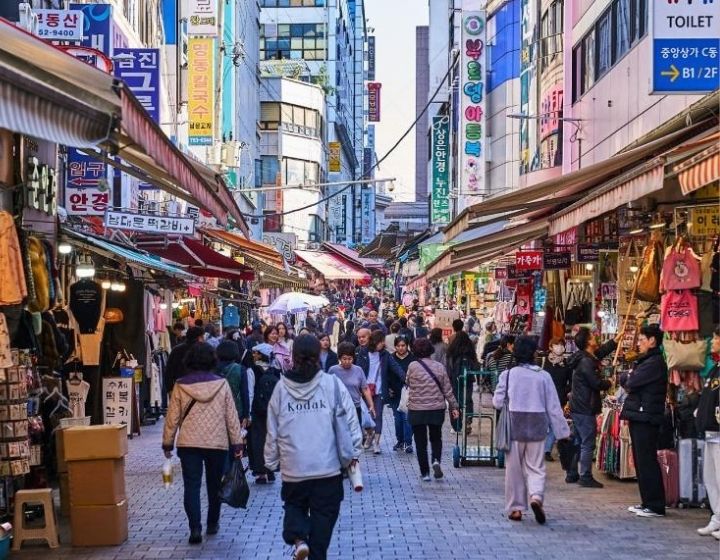
One of the best things about shopping in Seoul is just how much range there is, whichever end of the budget you’re on. For the cheapest finds, Dongdaemun Market is Korea’s largest wholesale and retail district, open 24 hours with tens of thousands of shops selling everything from clothes and shoes to fabric and toys, often 30 to 50 percent cheaper than retail price. Namdaemun Market, running since 1964, offers a similar bargain-hunting experience with a more old-school, traditional market feel, packed with clothes, kitchenware, ginseng and imported goods.
For something more refined, Myeongdong is where most visitors end up at least once, a lively strip crammed with cosmetics shops, street food stalls and mid-range fashion, all within walking distance of each other. If you’re after the big designer names, Seoul’s major department stores, Lotte, Shinsegae and Hyundai, are where you’ll find luxury brands under one roof, along with the kind of polished food halls that make for an easy break from walking.
And if you want to see where Seoul’s shopping scene is headed next, Seongsu is the neighbourhood to visit. Once an industrial part of the city, it’s since been dubbed “the Brooklyn of Seoul.” It’s now the go-to spot for global brand pop-ups, with names like Nike, Dior and Aesop regularly setting up shop alongside indie K-beauty labels, making it one of the trendiest and most photographed shopping areas in the city right now. The weakening won has only added to Seoul’s appeal as a shopping destination lately. Foreign visitor spending hit record highs in 2026, as everything from K-beauty to luxury goods becomes that much more affordable once converted back to home currency.
Dongdaemun General Market, 272 Jong-ro, Jongno-gu, Seoul, www.dongdaemunmarket.com
Namdaemun Market, 21 Namdaemunsijang 4-gil, Jung-gu, Seoul, www.namdaemunmarket.com
Where to eat in Seoul
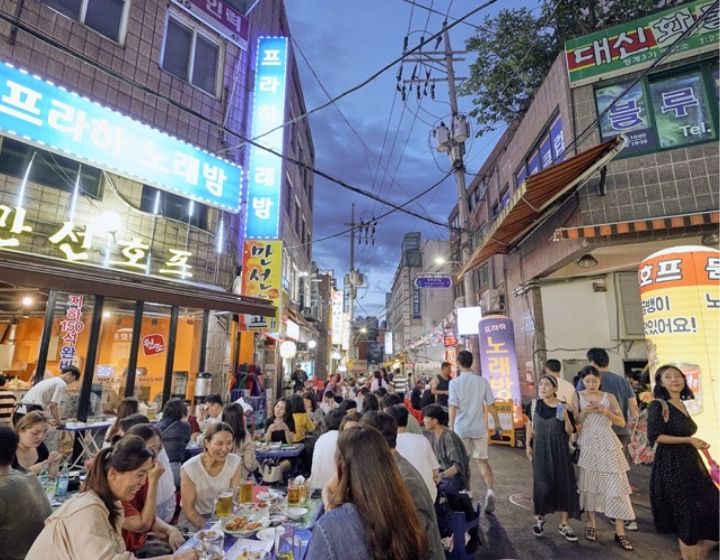
Seoul might just be one of the most exciting food cities on the planet, and the best part is you can go from a paper cup of street snacks to a full-blown tasting menu without ever leaving the same neighbourhood. Michelin-starred spots share the block with fried chicken joints and late-night noodle stalls, and honestly, nobody in Seoul treats that as a contradiction. Mingles currently holds the city’s only three Michelin stars, serving up refined modern Korean cooking, while Gangnam’s skyscrapers hide everything from traditional hanjeongsik banquets to omakase counters that have become just as impressive as anything you’d find in Tokyo.
Then there’s the Netflix effect. Culinary Class Wars turned a bunch of under-the-radar chefs into household names almost overnight, and their restaurants have been booked solid ever since. Kwon Sung-jun, aka “Napoli Mafia” on the show, saw his restaurant Via Toledo become one of the toughest tables in the city after his win, and he’s far from the only one. Reservation apps like Catch Table and Naver have had to roll out English, Japanese and Chinese versions just to keep up with fans trying to snag a seat.
If you’ve caught wind of hanwoo beef and Jeju pork recently landing on Singapore menus, you’ll want to know they’re notably cheaper at BBQ restaurants in Seoul. Both are a regular fixture on grills across the city, rather than a premium import. It’s a good excuse to eat like a local while you’re there.
For something a little grittier, head to Euljiro after dark. What used to be a strictly industrial district by day turns into one of Seoul’s liveliest food and drink scenes once the sun goes down, earning it the nickname “Hipjiro” among locals. Its alleys are packed with pojangmacha, orange tents dishing out grilled dried pollack and fried chicken with a side of cheap draft beer, right next to speakeasy-style cocktail bars with no sign out front to give them away.
At street level, there’s tteokbokki, hotteok, gimbap, and pretty much anything that can be fried and handed over in a paper cup. Whether you end up chasing a Michelin star or just grabbing whatever smells good at a market stall, Seoul rarely runs out of ways to feed you.
How to travel from Singapore to Seoul
Getting to Seoul from Singapore is quite straightforward, with a direct flight taking around six and a half hours on carriers like Singapore Airlines, Korean Air, Scoot and T’way Air. Full-service airline fares tend to run higher, while budget options like Scoot and Jeju Air can bring one-way fares down to as low as around $140 to $150 if you book early enough.
If Jeju Island is on your list too, T’way Air, Scoot and Singapore Airlines all fly direct from Singapore to Jeju. That means you can skip the usual Seoul layover and fly straight in, making it easy to plan a Seoul-and-Jeju trip without extra hassle. It’s especially worth considering in spring, when Jeju’s canola fields burst into bright yellow bloom from around late March through April, one of the island’s prettiest times to visit.
Family tips for visiting Seoul
Getting around: For taxis, download Kakao T. It’s Korea’s go-to ride-hailing app, and the best part for non-Korean speakers is that you type your destination instead of trying to say it out loud, so the driver just gets it on their screen. No Korean phone number needed to sign up, and most foreign cards work fine. Uber’s around too, running through a partnership with local taxis, so it’s there if you’d rather use an app you already know.
Navigating Seoul: Skip Google Maps once you’re out walking or taking the subway, though. Korea restricts map data for security reasons, so Google’s navigation is pretty unreliable here. Naver Map is what locals actually use, and it gives you proper walking directions, live subway and bus info, and even which platform to head to.
Getting urgent essentials for kids: Running out of diapers or baby stuff mid-trip isn’t a disaster either. Coupang, basically Korea’s Amazon, has a Rocket Delivery service fast enough that ordering at night can get things to your door by morning. The app’s in English and takes foreign cards, so it beats hunting down a supermarket or a pharmacy. There is a small catch, though. The guaranteed next-morning speed is really meant for people with a Korean residency card, and tourists won’t have one, so don’t be surprised if your delivery shows up a little later than promised.
Child-free establishments: Also worth knowing: some cafes and restaurants in Korea are “No Kids Zones,” meaning kids, sometimes even teens, aren’t allowed in at all. It’s a pretty common and debated policy here, so it’s worth a quick check or a glance at the door before you settle in somewhere with the family.
Peak hour timings: And if you can swing it, try to avoid the subway during rush hour, roughly 7.30 to 9am and 5.30 to 7pm, when trains get so packed you might have to let a couple pass before you can even squeeze on. Bringing a stroller into that crush is out of the question, you simply won’t fit. Sticking to somewhere between 10am and 4pm makes for a much easier ride if you’ve got kids and a stroller with you.
Read more:



![[𝗧𝗥𝗔𝗩𝗘𝗟] 𝗨𝗻𝗶𝗾𝘂𝗲 𝗛𝗼𝗻𝗴 𝗞𝗼𝗻𝗴 𝗙𝗲𝘀𝘁𝗶𝘃𝗲 𝗘𝘃𝗲𝗻𝘁𝘀 𝗧𝗼 𝗔𝗱𝗱 𝗧𝗼 𝗬𝗼𝘂𝗿 𝗜𝘁𝗶𝗻𝗲𝗿𝗮𝗿𝘆 𝗧𝗵𝗶𝘀 𝗬𝗲𝗮𝗿 𝗘𝗻𝗱 (𝗣𝗮𝗰𝗸𝗲𝗱 𝗪𝗶𝘁𝗵 𝗙𝗮𝗺𝗶𝗹𝘆 𝗙𝘂𝗻!) 🤩🎄✨
The year-end is a great time to visit Hong Kong, with plenty happening across the city. Take the kids on a trip to space at the Fly Me to the Moon exhibition, where they can experience a simulated moon landing and design their own lunar base!
Around the same time, there's the Wine & Dine Festival and Hong Kong Gourmet Month also runs from 1 to 30 November, with limited-edition dishes, dining experiences and exclusive offers. Festival-goers can also use their Wine & Dine Festival ticket stubs to redeem offers at selected restaurants.
WinterFest also returns in November, while the 20th Tai Kok Tsui Temple Fair brings a night dragon dance to the city. And to round off the year, there’ll be fireworks over Victoria Harbour on 31 Dec!
𝗧𝗵𝗶𝗻𝗴𝘀 𝘁𝗼 𝗻𝗼𝘁𝗲:
- Pick two or three events and leave the rest, because trying to do everything with kids in tow is how trips turn into a slog.
- Bring a jacket for the kids, because Hong Kong evenings can be quite breezy near the harbour and you'll be outside for a lot of these events.
- Dates,prices and locations for a few of these events are still to be confirmed, look them up again closer to your trip.
Comment "HK" or link in bio to find out more!
𝘐𝘮𝘢𝘨𝘦 𝘤𝘳𝘦𝘥𝘪𝘵: 𝘏𝘰𝘯𝘨 𝘒𝘰𝘯𝘨 𝘛𝘰𝘶𝘳𝘪𝘴𝘮 𝘉𝘰𝘢𝘳𝘥, 𝘖𝘤𝘦𝘢𝘯 𝘗𝘢𝘳𝘬 𝘏𝘰𝘯𝘨 𝘒𝘰𝘯𝘨 & 𝘏𝘰𝘯𝘨 𝘒𝘰𝘯𝘨 𝘋𝘪𝘴𝘯𝘦𝘺𝘭𝘢𝘯𝘥 𝘙𝘦𝘴𝘰𝘳𝘵
](https://www.sassymamasg.com/wp-content/plugins/instagram-feed/img/placeholder.png)