View All


 View All


 View All

 View All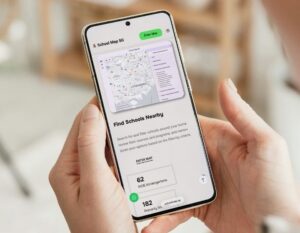


 View All


 View All
 View All


 View All
 View All



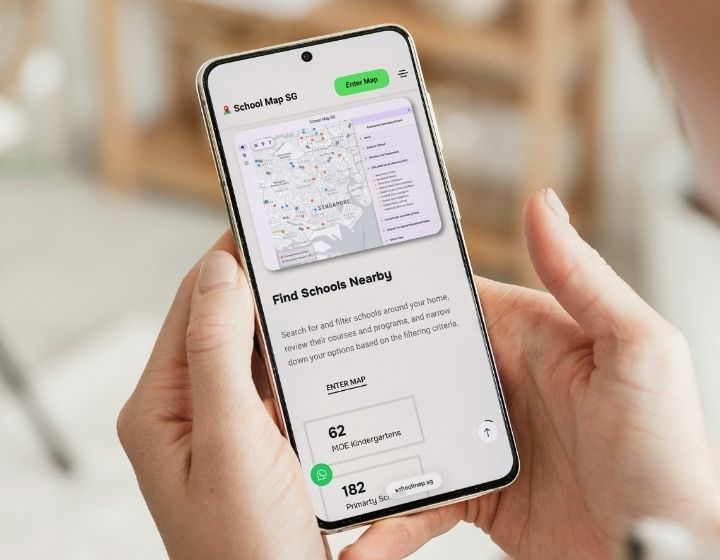
“Instead of pushing all children toward the same definition of success, parents should try to discover what their child is genuinely interested in and where their natural strengths lie.” Father of three, Elvis Lyu, shares why he built a comprehensive school map from scratch, to help fellow parents navigate Primary 1 and secondary school registration.
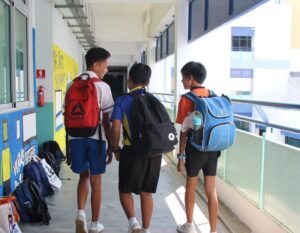
It’s that time of year again: Primary 1 registration has been all the buzz in Singapore, and for many parents, it’s one of the more trying stretches of their child’s education journey. Between sibling priority, alumni ties, and phases that come down to sheer distance from home, getting a spot at their preferred school can feel like a game of chance. Many parents in Singapore believe that where a child ends up can shape a lot, from the school’s Co-Curricular Activities (CCAs) to their shot at their preferred secondary school later on.
With his eldest son starting primary school in 2025, Elvis Lyu decided to build a tool from scratch that would help him find the best school for his child. Elvis, who calls himself “Trinity Daddy” as a father of three, moved to Singapore in 2019 from China with his wife after her career brought them here. Having been new to Singapore’s education system himself, he knows the stress of figuring out primary school admissions firsthand. He grew up and studied in Beijing, where he later ran an internet company that developed AR-related mobile apps. As a foreign parent, he found himself planning his children’s education while his family’s residency status was still uncertain, a challenge that made an already complex system feel even harder to work through. He and his wife are permanent residents now.
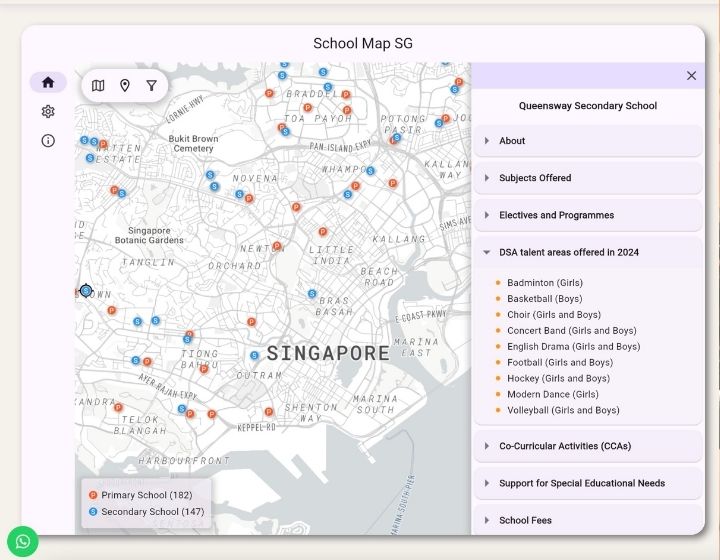
That experience, combined with a memory from his own childhood of missing out on an opportunity simply because he didn’t know it existed, pushed the entrepreneur to build School Map. This free tool lets parents check past P1 registration results, find schools near home, match CCAs to Direct School Admission (DSA) options, and see which secondary schools they qualify for based on PSLE scores. For Elvis, finding the right opportunities matters just as much as academic results. He shares with us the story behind School Map, and how it helps parents plan ahead.
Read more Cool Dad stories here.
You came to Singapore in 2019. How does the education system here compare to where you grew up, and what challenges did you face navigating it for the first time?
The (Chinese) education system I grew up with was quite traditional and academically focused, so what struck me about Singapore was how it blends East and West. Some schools follow a more Chinese or Asian approach, with a strong focus on academics, discipline and structure, while international schools lean more Western, with an emphasis on creativity, independence and personal development.
But the biggest challenge when we first arrived wasn’t choosing between these philosophies, it was the uncertainty around our immigration status. As foreigners, we had no idea when, or whether, we’d become permanent residents. That uncertainty shaped how we approached our children’s education, since the right strategy can look very different for foreigners versus PRs. We had to weigh access to local and international schools, costs, and what might change if our residency status did. In the end, the challenge was making a long-term education plan when one of the biggest factors was still up in the air, so we tried to make the best decision for our kids at that moment while staying flexible enough to adjust later.
Was it this personal experience that motivated you to create School Map? What was the turning point?
Yes, definitely. I still remember something from high school: a classmate won a gold medal at a national Olympiad in computer science, which helped him get into a top university in China and later an Ivy League school in the US. I was just as passionate about computers back then, but I simply didn’t know how to get into those competitions, no one had shown me that path. It left a deep impression on me. Sometimes a child’s path is shaped not just by their ability, but by what their family knows and whether they’re even aware of the opportunities out there.
Years later, as a parent in Singapore, I found myself on the other side of that same issue. Singapore has a comprehensive education system, but there are so many decision points along the way, from MOE Kindergarten to primary school, the different phases of P1 registration, and later DSA. The information is scattered across different websites and sources, and there wasn’t one place to see the whole picture and figure out what to prepare for next. As an entrepreneur, my instinct was: if I can’t find the tool I need, why not build it myself? That was the turning point for School Map. I started out just wanting something useful for myself, but soon realised other parents were probably facing the exact same problem. That’s how School Map started.
From the initial idea to the live launch, how long did it take you to build the map?
It took about six months to build the first proper version of School Map, but the idea started in a much simpler way. I began by manually plotting every school on Google Maps, which was time-consuming, but useful, since my family was house-hunting in Singapore at the time. Whenever we viewed a property, I could quickly check which schools were within a kilometre. As I used it more, I kept thinking of new features that would help, and the project outgrew what Google Maps could support. That’s when I decided to rebuild it from scratch as School Map. It didn’t start as a business idea. It began as a tool I built to solve my own problem as a parent and homebuyer, and gradually grew into something much bigger.
P1 registration is known to cause a lot of anxiety, especially given its reliance on home-to-school distances and citizenship phases. What’s your main goal for School Map, and how do you hope it helps parents through this stressful period?
For local Singaporean families, the pressure is relatively manageable since they get higher priority under many policies. School Map may be even more valuable for new immigrants and foreign families, especially those who’ve just arrived and haven’t yet decided where to live. By simply entering their residency status and home address, parents can see nearby schools, understand which ones their child may be eligible for, and gauge their chances. Without this tool, they first need to learn what each Primary 1 registration phase means before they can begin evaluating their options.

What is something you feel is important for kids and parents to do to reduce school-related stress?
I think the most important thing is understanding that every child is different. Instead of pushing them all toward the same definition of success, parents should try to discover what their child is genuinely interested in and where their natural strengths lie. From there, they can help their child explore opportunities to pursue it, whether through school activities, competitions, special programmes, or simply more space to learn and experiment.
I believe a lot of school-related stress comes from comparison, from trying to fit every child into the same path. When parents understand their child better and focus on finding the right opportunities for them, education becomes less about pressure and more about helping the child grow in their own direction. For me, the goal isn’t to make every child follow the same successful path, but to help each child find the one that suits them best.
What were the biggest challenges you faced while bringing School Map to life?
The biggest challenge was definitely collecting accurate and reliable data. Parents use School Map to make important decisions about their children’s education, and sometimes even about where to live, so data accuracy has always been something I take very seriously. My biggest concern was that incorrect or outdated information could lead a parent to make the wrong decision. That’s why a significant amount of time went into collecting, verifying and maintaining the data. For me, School Map isn’t just about putting information on a map. It’s about giving parents information they can trust when making important decisions for their children. That sense of responsibility has probably been the biggest challenge, but also one of the most important principles behind the project.
Many existing parent tools focus strictly on academic metrics like PSLE cut-off points, but you chose to also include comprehensive CCA and DSA data. Why do you believe these non-academic factors matter just as much for young kids?
I’m probably one of the best examples of why I believe non-academic strengths matter just as much as academic results. When I was a student, basketball was one of my strengths, and it was actually through basketball that I got the opportunity to enter one of the best high schools. That experience taught me early on that a child’s talent outside the classroom can open doors and even change their educational path. Singapore’s DSA system reflects a similar idea. Students admitted via DSA represent around 10% to 12% of the entire Primary 6 cohort, so it’s a meaningful part of the secondary school admissions landscape, not a niche pathway.
But talent alone isn’t enough; a child also needs the right platform to develop it. Imagine a child who’s talented and passionate about football but ends up in a school without a football CCA or team; even with great potential, there’d be fewer chances to train and compete. A school with a strong football programme could offer that same child a completely different path. That’s why I believe parents should look beyond PSLE cut-off points, and also ask what their child is interested in, what they’re good at, and which school can give that strength room to grow. It’s also why School Map includes comprehensive CCA and DSA information, so parents can match their child’s interests and strengths with the opportunities a school provides, not just their academic profile. My own experience taught me that talent matters, but so does opportunity, and sometimes the right platform at the right time can make a big difference in a child’s life.

How does School Map help parents search through school CCAs and find matching DSA options for their child’s talents?
I think of it as two connected parts: primary schools that offer a particular CCA, and secondary schools that offer DSA in the same area. That information is already available through MOE, but presented separately. What School Map does is organise, categorise and connect these two sets of data so parents can see the pathway more clearly. For example, if your child is interested in basketball, you simply select basketball on School Map, and it’ll show you which primary schools offer it as a CCA and which secondary schools offer it through DSA. This lets parents see a potential pathway for their child, from developing an interest in primary school to using that strength for DSA later on. One important detail is that some CCAs and DSA programmes are gender-specific, so School Map also flags this for parents to consider. The information itself already exists, but the real value is in connecting it, so instead of searching through many different pages, parents can select their child’s interest and immediately see the relevant opportunities in one place.
What is your strategy for keeping this massive database accurate and up-to-date year after year as rules evolve?
In the beginning, I collected and updated all the information manually, which was extremely time-consuming. Now, I use AI to help with data collection and verification, making the whole process much more efficient. Recently, I organised and verified two years’ worth of data in just a few hours, work that would have taken several weeks to do manually before. AI has completely changed how I maintain School Map. It lets me process large amounts of information faster and cross-check data more efficiently, which makes it much easier to keep the platform accurate and up to date as school information, programmes and education policies continue to evolve.
Looking beyond P1 registration, what’s the vision for School Map? Any new features or tools you’re planning to roll out next?
Recently, I’ve been experimenting with some interesting new features. One example is a primary school basketball ranking that brings together competition results from the past several years, covering junior and senior divisions for both boys and girls. I’ve already been using the data to help school basketball teams analyse their opponents, and coaches have responded really well. I plan to expand this to more sports and activities in the future.
What’s your favourite family-friendly activity in Singapore, and what do you love most about living here?
My favourite family activity is playing basketball with my kids, we spend a lot of time on the court every week, and it’s become an important part of our family time. One thing I really appreciate about living in Singapore is how accessible public facilities are for families and sports. Basketball courts, playgrounds and parks are almost everywhere, and many are well maintained. For a family with children, that makes a real difference. We don’t need to plan something complicated or travel far, we can just go downstairs or to a nearby court and enjoy a few hours together. That convenience, combined with Singapore’s safe, family-friendly environment, is probably one of the things I enjoy most about living here.
What feedback have you gotten from users of School Map?
To be honest, I haven’t received any feedback from users. School Map started as a tool I built for myself, and over time I got busy with other things, to the point where I’d almost forgotten about the project! So I’m actually very grateful to Sassy Mama for rediscovering it and bringing my attention back. This interview has reminded me that something I built to solve my own problem can still be useful to other parents. It has motivated me to keep maintaining and improving the platform, so it can help more families navigate Singapore’s education system. And by the way, the data’s already been updated for this year, so School Map is very much alive!
Need some help navigating P1 registration, DSA and more? Check out School Map SG, built by dad-of-three Elvis Lyu. There, you can look up past registration results, find schools near you, and even see which secondary schools your child could qualify for down the road. You can also check the important dates and details for registering your child for primary school in Singapore here.


![[𝗙𝗥𝗘𝗘] 𝗧𝗵𝗶𝘀 𝗜𝗻𝘀𝗲𝗰𝘁-𝗧𝗵𝗲𝗺𝗲𝗱 𝗣𝗹𝗮𝘆𝗴𝗿𝗼𝘂𝗻𝗱 𝗛𝗮𝘀 𝗚𝗶𝗮𝗻𝘁 𝗕𝘂𝘁𝘁𝗲𝗿𝗳𝗹𝗶𝗲𝘀, 𝗔 𝗕𝗲𝗲, 𝗖𝗿𝗶𝗰𝗸𝗲𝘁 & 𝗚𝗿𝗮𝘀𝘀𝗵𝗼𝗽𝗽𝗲𝗿! 🦋🐝🦗
This isn’t your usual neighbourhood playground! Designed around an insect theme, the larger-than-life creatures are part of the play itself, with plenty of ways for kids to crawl, balance, slide and make their way from one section to the other.
There are also easier play areas for younger kids, fitness corners for the adults, plus plenty of seating nearby, including sheltered spots when you need a break.
Link in bio or comment “Insect” for more info & more free playgrounds!
𝗪𝗵𝗲𝗿𝗲: Blk 339B, Yishun Avenue 6, Singapore 760339
𝗛𝗼𝘄 𝘁𝗼 𝗴𝗲𝘁 𝘁𝗵𝗲𝗿𝗲: Take Bus 801 from Yishun Interchange → Alight at Opp Blk 334B
𝗛𝗼𝘄 𝗺𝘂𝗰𝗵: FREE](https://www.sassymamasg.com/wp-content/plugins/instagram-feed/img/placeholder.png)